Is Big Tech the New Big Oil? Notes

Link to article

This article takes a general look at the last revolutions we have had – from industrial revolution to tech revolution. We are now in an IT revolution in which we mine ourselves, our data for resources.

  • The industrial revolution = energy revolution
  • Current tech revolution is comparable to the industrial revolution in its scope, impact and effects
  • We learned to capture increasing amounts of energy and then build things called machines
    • Machines manipulate the energy to do something we want it to do
  • We have extracted energy trapped in concentrated biomass (fossil fuels)
    • This was the start of oil
  • The tech revolution is about capturing and processing data
  • Similarities and dissimilarities in the positives and negatives of the two revolutions

The Flow of Money

  • Wealth created during the Industrial Revolution → made for “industrialized countries” 
    • Increased the gap between well-off and not so well-off countries
  • The tech revolution also played a huge role in globalization + level of connectivity 
    • Led to the concentration of global wealth
    • Plays a major role in reducing inequality across countries but increasing it within and at the level of humanity
  • Tech revolution → playing a major role in reducing inequality across countries but increasing it within and at the level of humanity
  • Just 9 of the world’s richest people own more wealth than the poorest 4 bilion
    • 6 out of 9 are from tech industry

The Collateral Damage

  • Our current global ecological footprint is 1.7 Earth’s
  • Mass extinction of species, pollution of air/water, and destruction of natural systems
  • We hacked and exploited the natural ecosystem 
  • IT revolution is doing something similar → but 
  • We are mining ourselves 

The curse of short-sightedness…

  • Long term consequence of pumping large amounts of greenhouse gases into the atmosphere
  • Moved from being farmers to factory workers, lawyers, programmers
  • Humans have a.) physical labor, b.) mental labor → physical labor taken away from us in the industrial revolution and mental labor taken away by the tech revolution. 
  • Short-sightedness or ignore the problems for the sake of financial gains
  • “Move fast, break things” in silicon valley→ but what if the thing that is broken is unrepairable?
  • Not undervaluing the contribution of tech → but we need to have these discussions to shine light fro our last revolution to the current one so we can learn from the mistakes

Conversation with Tom – 12/10/19

Notes from my office hour with Tom Igoe

As always, this was a very helpful session.

  • How far away does this material go?
    • Chase down the line → where does the crap on this board lead to?
  • Graphically communicate this complex system of breaking electronic components down
  • Teardown
    • Just being able to say → circuit board as a whole thing→ 2 different recycling materials but related → different parts are harder to tackle
    • Are ground up resistors actually reusable? 

Interview with Kara, Sims Recycling Center

Interview Notes

Some Takeaways:

  • What happens when electronics show up… they become co-mingled with all the other waste like metal, glass, plastic
    • At the recycling center there are a series of technology that sort out the different materials that then get sold to the smelters
    • With an electronic products, there’s no technology that sorts it out from the mix
    • If it accidentally gets in the mix the consequences are dangerous
    • Especially with batteries, fires can occur at the center if they are mixed in
  • Other problems that happens when electronics get mixed into the waste batch
    • Electronics are going to waste —> negative consequences when they go to landfills and incinerators
    • If it ends up in a waste bail (tightly compressed cubes), they bail up the waste and the electronic ends up going to incinerator
    • What happens if the electronic ends up the waste pile? Need to know specifics!

Interview with Christine, LES Ecology Center

Interview Notes

Some Takeaways:

  • Still a youth opportunity to educate people more about what happens to electronics when they are thrown and why they should care about it
  • Advocate for in the industry → items are not just produced → planned obsolescence in mind → then the printer doesn’t work → really build things that can be created → cell phones that have batteries that can be exchanged to live together → better design of these products → pushed by the industry to sell → not just about squandering 
  • “Big picture is that we want to see devices not get thrown away so easily” – Christine

Initial Personas

General Personas

– Middle school to high school students

– Educators

– People who work with trash or e-waste, people in the e-waste/waste community

Specific Personas:

During my talk with Marina Zurkow, she mentioned I should think about personas. Part of what was missing from my research and proposed scenario was the “who is this for” aspect. I realized that even if my personas are subject to change, it will be good to at least reflect on who I’m designing for. Depending on who it’s for, the design will drastically change. 

Persona 1

Name: Davin

Role: 6th grade student

Age: 12 years old

Hobbies: piano, drawing, reading science-fiction books 

Davin is interested in recycling and waste after visiting a Recycling Center for a school field trip. While at the Recycling Center, he was able to see where his and everyone’s trash goes. There was also an exhibit/ information center at the Recycling Center. This is where he was able to learn more about the subject and was taken aback by the electronic waste section. He found out where some of his electronic products come from and was disturbed to know that the toxic chemicals and mining were unsafe for the workers and bad for the environment. Since the field trip he has been pushing his parents to compost and asking more questions about where their batteries go when they are dead.

Persona 2


Name: Milly

Occupation: Software Engineer

Age: 33

Hobbies: plant keeping, volunteering at the botanical garden, hiking, taking night classes to improve her skill sets and knowledge

Milly tries to spend as much time away from the screen when not coding for her job. She loves hiking and is influenced by books such as “The Silent Spring” and “Cradle to Cradle.” From reading general public books and from keeping up with the news, she is upset at the environmental damages that humans cause. Milly recently wanted to throw away her growing pile of printer cartridges, batteries, and broken electronics (i.e. toaster, hair dryer) but doesn’t know how to do it properly. All she knew was that she can’t just toss it into the garbage, so she looks up for places to throw away her electronic waste. Upon searching she also stumbles upon a lot more information about e-waste. This leads her to go down a rabbit hole and she finds herself spending hours reading online articles on the topic.

Conversation with Marina – 11/25/19

Date/time 
Monday, 11/25/19


Good books/articles/websites she recommended


Other notes or reflection

She was extremely great at helping me take a step back and reflect on what it is I want people to take away from this project? As opposed to making a speculative project (something I feel uncomfortable doing anyways), the nudge was to make a connection and create validity amongst the community at the forefront of e-waste. Ultimately, whose attention am I trying to get and what are the takeaways I want people to have? Is awareness even the issue? How to make changes in habit? Also, she has the most spot-on references. So much gratitude for her.


Other self-reflective questions and notes to think through: 

  • What is the best strategy for learning?
  • Nudges to stay away from speculative art as it will be harder for the waste community + experts to take me seriously this way
  • Can I trace the emotional journey that I went through since I began my research?
  • What happens to the products after sorting? This is just something I should find out.
    • Outreach campaign on the appropriate ways to dispose?
    • What happens to recycling after sorting in NYC?
  • What is the effective/affective outcome that I want? I should think outcomes and work backwards
  • Issues with using the microscope as a metaphor for looking closer in this context
  • Semiconductor fields: beautiful films that explain scientific concepts 
    • But the question remains…what next? 
    • What am I trying to achieve?
  • Awareness; change habits? 
  • Who is this for?
    • For kids? If so, need to know protocol
    • Why are you asking people to care?
  • What’s the next generation of recycling?
  • Is there really a value in seeing this arc of life to death?
  • Ask the experts, ask LES ecology, ask SIMS Recycling Center.

Rough Storyboard Scenario

Scenario of an example concept:
(definitely subject to change)


Concept:

Different electronic products (i.e. smartphone, laptop, blow dryer) will be taken apart. Their components (i.e. lcd screen, battery, etc) will be placed in petri dishes and organized next to a diagram that will show where each piece originally belonged. The idea is that people will be able to examine each electronic component more closely by placing it under a microscope. At first, the information shown will be focused on the material science of the element. Then the information will “zoom out” to show the socio-political, environmental, health issues associated with mining that element/material. The website/screen will also show where these electronics most likely end up when disposed and the health and environmental hazards at risk when the electronics are broken down.

The microscope is used here as a symbol of looking closer at something. While microscopes are often used in nature or science labs, they are not commonly used to examine objects that we use on a day to day basis. My intention is to set up a scene that allows people to have a closer look at the birth, life and death of an electronic product and see the invisible forces that make it what it is.


Steps of the scenario:

  1. Person approaches a table or display that has all the electronic components taken apart and organized based on the product it belongs to.
  2. Person can take one of the components, which are each put into a petri dish, to the microscope station. With the microscope people can take a closer look at each component.
  3. When a component is under the microscope, the large screen will display facts about the life-cycle of the piece. Facts will include:
    • the function that the piece provides
    • the raw materials/elements that are used in the component
    • where those materials/elements are sourced in the world
    • the environmental, socio-political, and health hazard involved with mining that material
    • the process of turning those materials into a usable piece, the labor involved
    • where the piece ends up when we dispose of it
    • the health and environmental impacts when they are disposed of and taken apart by people
  4. After examining that component, a person can choose another one to examine under the microscope

Questions:

  1. A question that was asked in a thesis questionnaire was: “How does the project improve what already exists?” I really don’t know if it does? I really don’t know if a setup like this exists and whether it would be beneficial to anyone but myself. But how can this concept be better and give justice to the research and content?
  2. The topic of e-waste is very wide and deep. I’m wondering if I should cast a wide but shallow net or if I should go deep on a small slice? How would I go deep on a small portion? Do I focus in on just one product?
  3. I think it is important for me to properly explain and visualize the source and disposal of different products first. But perhaps there is a way to do a second piece that is more speculative and active? Maybe that project can be focused on alternative methods of living with electronics/ how we can better improve the situation of e-waste given the current circumstances?

5-3-3

5 questions to investigate with my thesis

  1. What are the chemicals and materials used in our electronic products and how are they sourced? What is the full process of obtaining all the materials used in our electronic devices?
  2. Where do our electronic products go when we dispose of them and how are they disposed of? 
  3. What are the human health, socio-political, and environmental consequences that arise from the making and discarding of an electronic item?
  4. How are governments, local organizations, communities and individuals dealing with the issue of e-waste currently and how can it be improved upon (if at all)?
  5. Obviously, society won’t be giving up our phones, laptops, and electronics, but what can we do on an individual and local level that can offset this increase in e-waste? 

3 possible venues for the work to be shown. Why?

  • Science or Natural History Museums (i.e. The Natural History Museum of LA, The Natural History Museum of NY, The Henry Ford Museum, Museum of Science and Industry)
    • I can see my project being very explanatory and fitting well with the playful yet informative spirit of science exhibit interactives. I intend to mix visuals, animations, code, fabrication, and physical computing together to create a “playful” approach towards the serious research.
  • LES Ecology Center
    • Jenny Odell displayed her “Bureau of Suspended Objects” during her artist residency at the Recology dump in San Francisco. Inspired by this project and approach, I think an approach could be to first get to know the community of LES Ecology Center. Then try to see their awareness/campaign/design needs. Hopefully this would be an extension of the LES Ecology Center’s mission and I could also ask them for their expert opinion. It’s also an excuse for me to be more involved in their community and ground my work with their cause.
  • Public Spaces/ Libraries/ Pop-ups in Different Locations (i.e. Gottesman Libraries at Teachers College Columbia University, James Gallery space at CUNY’s Center for Humanities Department)
    • It would be great to have my interactive be movable so that I can share the information with more people. I am thinking that entrances of libraries and school galleries with a humanitarian focus would work well for what I have in mind. The James Gallery at CUNY seem to promote dialogue, so it would be great to also create an event that allowed for discussion that focused on the topic of e-waste.
  • ALT: Website (as an alternative to the above)
    • All the content in this “exhibit interactive” could also be put into a website format. This way people who don’t have access to the physical form can still read the content/research.

3 experts or types of people to speak to about my thesis. Why?

  1. Kathryn Garcia, NYC Department of Sanitation Commissioner
    1. It would be amazing to have an interview with Kathryn to find out more about how e-waste is handled in the city. She would help me better understand the infrastructure that is setup in New York City to handle e-waste. 
  2. Natalie Jeremijenko, Associate Professor at NYU in the Visual Art Department + Artist + Engineer
    1. Another great recommendation by Margaret Smith. To put it broadly, her work uses technology as a way to inspire social and environmental change. She also teaches at NYU in the Visual Arts Department, so would hopefully be accessible to speak with. I am inspired by many of her pieces, specifically How Stuff is Made, Suicide Box, and her Fish Interface.  
  3. Christine Datz Romero, Co-founder and Executive Director of Lower East Side Ecology Center
    1. She is the co-founder and executive director of the Lower East Side Ecology Center. Christine has also been at the forefront of the Compost Collection Program and the Ecology Center’s innovative Electronics Waste Recycling program. Dr. Robin Nagle mentioned that I look into her work and the LES Ecology Center. Christine would be helpful to ask questions about how to both gain awareness and take action in a local way.
  4. Dr. Robin Nagle, Clinical professor of anthropology and environmental studies in New York University’s School of Liberal Studies
    1. She was previously an anthropologist-in-residence for NYC’s Department of Sanitation. Her research is focused on the relationship between trash and cities. As recommended by Margaret, I reached out to Robin about the subject of e-waste. She was extremely helpful in my research process and recommended me a few books and articles to read. I plan to maintain my communication with her. 
  5. ITP Professors to be in constant communication with: Tom Igoe and Marina Zurkow as our in-house sustainability + ecology gurus; Shawn Van Every as tech expert as my end product will most likely involve web development; Genevieve Hoffman as data visualization guide

Narrowing + Reflecting

Image result for the story of stuff book

Readings

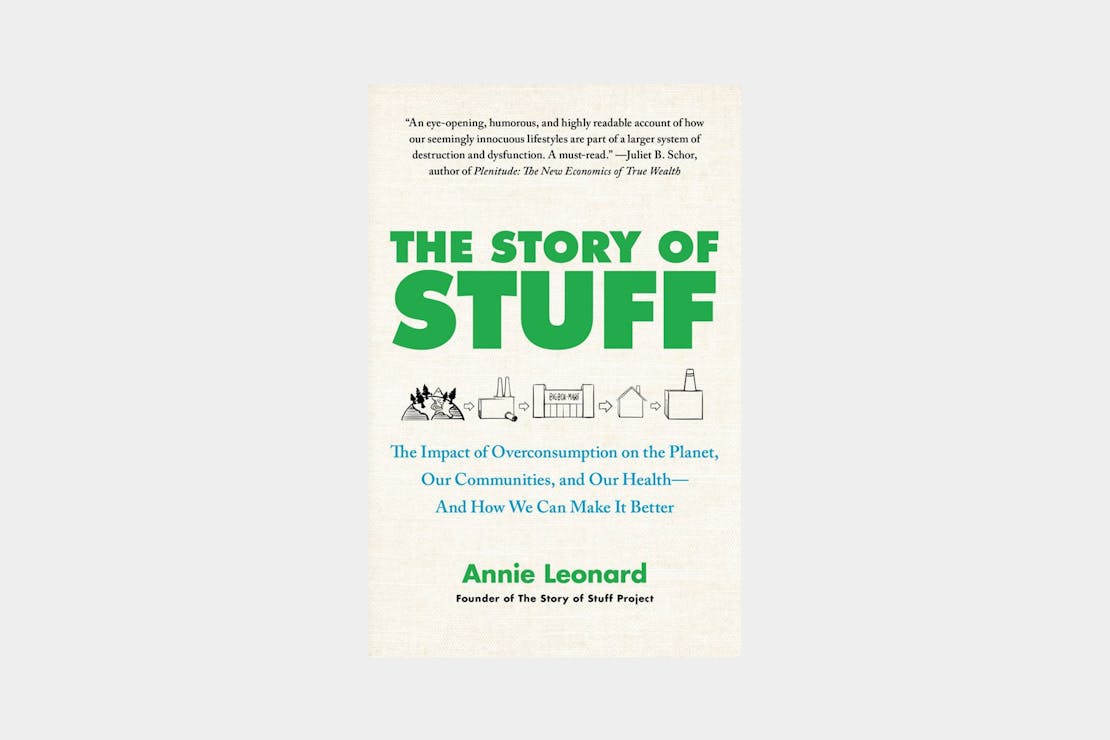
The past week, I’ve been reading “The Story of Stuff” by Anne Leonard. This book takes a closer look at the lifecycle of material products and how that ties in with our consumption habits. One of the main takeaways is that our western concept of trash is really messed up. She makes the case that the idea of trash” is a mental one. When the author visited another country, she noticed that when she put something in her garbage bin, that item would end up being used by someone else. For example, a shampoo bottle became someone’s flower vase. Although it is trash, it all needs to end up somewhere. In America, we put it away and somehow it gets put out of our site. But the truth is, trash doesn’t magically disappear. Some other takeaways were: e-waste is increasing 3x faster than other municipal waste. It is also the fastest growing and most toxic type of garbage today. According to the book the five most common reasons for e-waste are: 1.) cell phone upgrades, 2.) digital tv conversion. 3.) software upgrades, 4.) can’t change the battery on products, 5.) disposable printers. It goes without saying that all this stuff is highly toxic!

Becca, who is the most generous sharer of information, also sent me “The Environment is Not a System” by Tega Brain.

Our amazing GA, Ilana, also shared with me the article by Kate Crawford called “Anatomy of an AI.” It is a mind-blowing article that is completely spot-on for my topic. 

——

Conversation with George: 

On Monday, I had a phone conversation with George, the manager of ground and waste at NYU. He also manages the techno scrap (e-waste). This interview was extremely informative on many levels. From his explanation of how NYU handles it’s garbage and e-waste, I’ve gathered a few notes: 

a.) how little transparency there is in understanding what happens to our discarded electronics

b.) the whole process makes sense but requires work orders and the involvement of the facilities manager

c.) there are two types of “e-waste” at NYU: universal waste and techno scrap 

Notes from our meeting.

Conversation with Robin: 

On Thursday, I had office hours with Dr. Robin Nagle, an anthropologist-in-residence at the NYC Department of Sanitation and a Clinical Professor in NYU’s Center for Humanities Department. Upon doing more research on the topic of e-waste, several people have referred me to her and suggested that I take her course (which I will!). Upon telling her about my topic, she recommended me many sources. 


Readings she mentioned: 1.) “High Tech Trash” by E. Grossman, 2.) “Discard Studies” website – specifically their e-waste section, 3.) “Picking Up Trash” by herself 4.) “Cell phone recycling experiences in the United States and potential recycling options in Brazil” by Geraldo T.R. Silveira *, Shoou-Yuh Chang, 5.) “How are WEEE doing? A global review of the management of electrical and electronic wastes” by F.O. Ongondo, I.D. Williams, T.J. Cherrett

Names she mentioned: 1.) Josh Lepawsky who writes for the “Discard Studies”, 2.) Christine Datz-Romero of the LES Ecology Center

——

Ideas and Avenues: 

a.) The making of an electronic product Process of disposing/ breaking down an electronic product Current consumption habits that lead to extra waste, harmful human and environmental consequences All the people that come into contact with our electronics  Better practices/ actions we can take

a.) The making of an electronic product

b.) Process of disposing/ breaking down an electronic product

c.) Current consumption habits that lead to extra waste, harmful human and environmental consequences

d.) All the people that come into contact with our electronics 

e.) Better practices/ actions we can take


What else is out there like it?

Not sure of exactly what I will make, but here are some projects that I am inspired by and is related to what I’d like to make:

  • Anatomy of an AI System by Kate Crawford
  • Bureau of Suspended Objects – by Jenny Odell
  • Museum of Plastic Age – by Carrie Wang
  • Where Almost Everything I Used, Wore, Ate or Bought on Monday, April 1, 2013 (That Had a Label) Was Manufactured, to the Best of My Knowledge – by Jenny Odell
  • HSIM by Natalie Jeremijenko

What is the world/context/market that your project lives in?

Educational settings, public spaces, online (so accessible to anyone who has access to the internet and a computer